
This week, three different clients told me the same thing:
“I don’t know what’s happened! I just feel so stiff when I get out of bed.”
If that sounds familiar, you’re not alone.
Many people assume stiffness is an unavoidable part of getting older. They think they need to stretch more, push harder or simply accept that their body is wearing out.
Ageing does affect our tissues and joints, but it is only part of the picture. How we move—or don’t move—every day matters too.
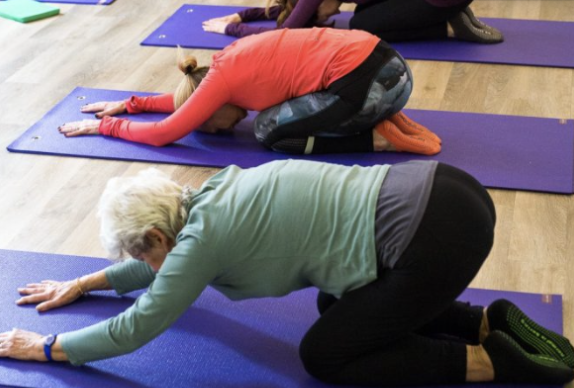
Over the years, I have seen clients in their 60s, 70s and 80s begin to move more freely than when they first came into the studio. Not because they suddenly became very flexible, but because they developed more varied movement, strength and confidence.
Why Do We Become Stiffer?
As we get older, many of us move less, sit for longer and repeat the same familiar movements. We may also gradually lose some of the muscle strength that supports our joints.
Pain or injury can change the way we move too. We naturally protect an uncomfortable area, but sometimes we continue avoiding certain movements long after the original problem has settled.
Our bodies adapt to what we regularly ask them to do. If most of your day involves sitting, walking on flat surfaces and reaching for things in front of you, there are fewer opportunities to rotate, bend sideways, reach overhead or squat.
Over time, movements we rarely use can begin to feel unfamiliar or restricted. This does not necessarily mean that the body is damaged. It may simply need more regular movement in a greater variety of directions.
Mobility Isn’t the Same as Flexibility
When we feel stiff, our first instinct is often to stretch. But flexibility and mobility are not the same thing.
Flexibility describes how much a muscle can lengthen. Mobility is the ability of a joint to move through a useful range with strength, stability and control.
Someone can be naturally flexible but still struggle to control a movement. Equally, someone who is not especially flexible may move very well because their joints are supported and their movements are coordinated.
Think about reaching one arm overhead. The movement involves more than stretching the shoulder muscles. The shoulder joint must move, the shoulder blade needs to glide around the ribcage, and the surrounding muscles must provide support.
This is why stretching alone does not always relieve stiffness. Sometimes the body also needs strength and control before it feels comfortable moving further.
Good mobility is not about achieving the biggest possible range. It is about having enough movement for everyday life—and being able to use it confidently.
Why Strength Matters
Strong muscles support our joints and help us control movement. We need strength for everyday activities such as getting out of a chair, climbing stairs, carrying shopping or lifting luggage.
Consider sitting down in a chair. Your hips, knees and ankles must bend, but your muscles also need to control you on the way down and help you stand again.
If that strength is missing, you may begin using your hands, choosing a higher chair or avoiding lower seats. Gradually, the movement can feel more difficult and restricted.
The body may also create tension when it does not feel well supported. What feels like tightness can sometimes be its way of providing stability.
Building strength does not have to mean lifting very heavy weights or exercising to exhaustion. Gradual, controlled resistance can make everyday movements feel steadier and easier.
Mobility allows us to access movement; strength helps us use it.
How Pilates Helps
Pilates combines mobility, strength and control, making it particularly helpful when the body begins to feel stiff.
In the studio, we don’t chase big stretches or force the body into positions it is not ready for. We focus on helping your body move with more ease, better control and greater confidence.
We explore movement through the spine, hips, shoulders and ribcage while strengthening the muscles that support those areas. The Reformer can assist a movement that feels difficult or provide resistance when the body is ready for more challenge.
Exercises can be adapted to suit your body and how you are feeling that day. This is especially valuable after pain or injury, when certain movements may feel worrying. Exploring them gradually can help the body feel safe and capable again.
The purpose is not simply to improve how you exercise in the studio. It is to make everyday life easier and help you continue doing the things that matter to you. That might mean gardening, travelling, walking further, enjoying a favourite hobby or taking on something that challenges you physically or mentally.
Everyone’s reasons for wanting to move well are different. What matters is having the confidence and physical freedom to keep making choices, trying new things and enjoying life.
A Simple Movement to Try – (Sit-to-Stand, Breathe and Reach)
Sit towards the front of a firm chair, with your feet hip-width apart and planted firmly on the floor.
Take a comfortable breath in, allowing your ribs to expand.
As you breathe out, lean forward slightly from your hips, press through your feet and stand. Reach your arms forward and, if comfortable, overhead.
Pause at the top and take another easy breath, noticing the movement through your ribs and upper back.
Breathe out as you lower your arms, send your hips back and return slowly to the chair with control.
Repeat 5–8 times at a comfortable pace.
Use your hands for support if needed and make the overhead reach smaller if it feels uncomfortable. Don’t worry about matching every movement perfectly to your breathing, the breath should help the movement flow, not become another thing to get right.
The aim is not to make the movement as big as possible, but to combine breath, mobility and strength with ease and control.
Stop if you experience pain, dizziness or unsteadiness.
It Isn’t Simply “Your Age”
Growing older does not mean giving up the ability to move well.
The body remains adaptable throughout life. Moving regularly, exploring different directions and gradually building strength can make a meaningful difference.
So, if you have been wondering whether stiffness is “just your age”, perhaps your body is asking for something different—not more force or endless stretching, but more variety, more strength and a little patience.